← Back to work / Self-initiated 01 / 09
Add Salt
A native iOS recipe app, built solo with AI, to learn what AI-assisted development actually feels like and make something I'd want to use.
2026
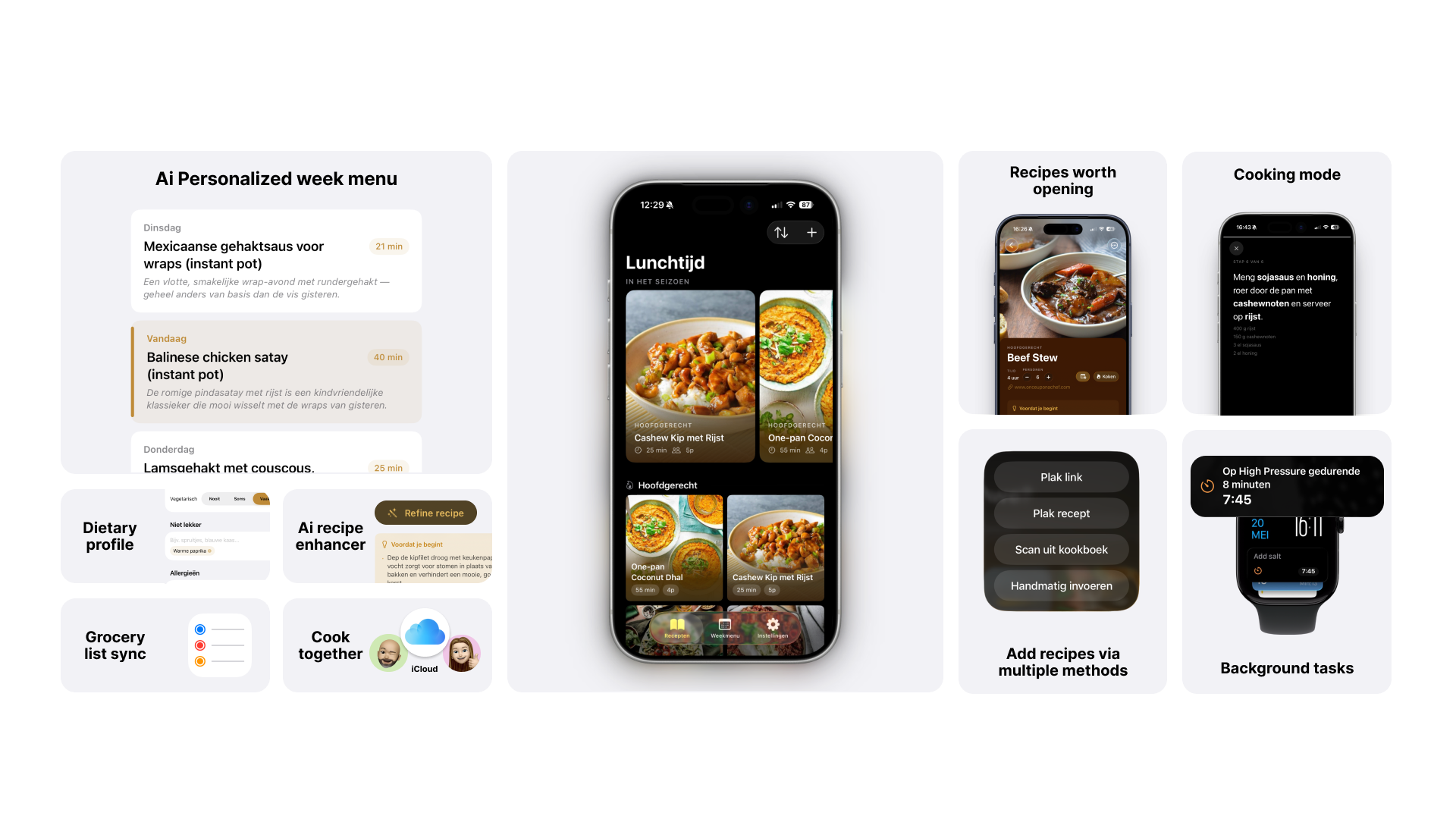
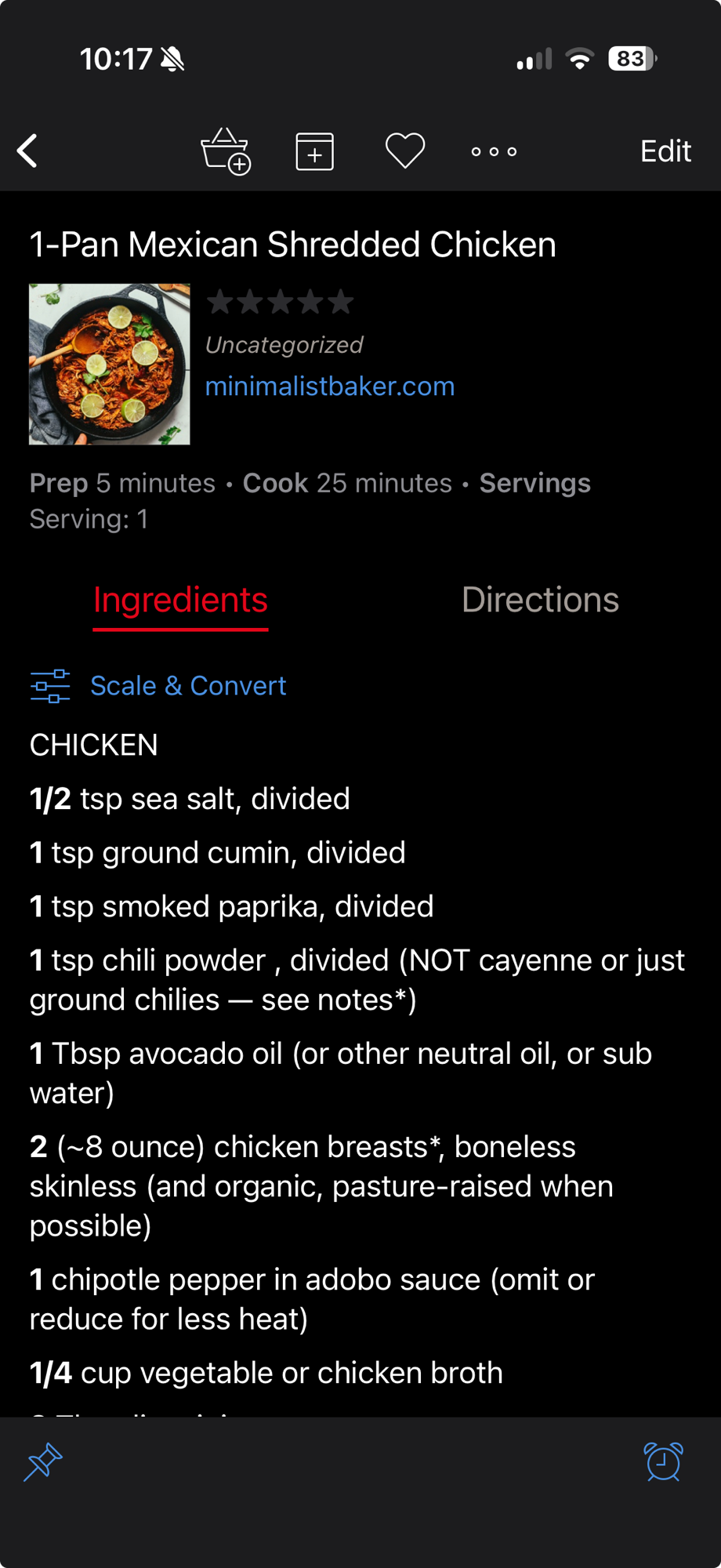
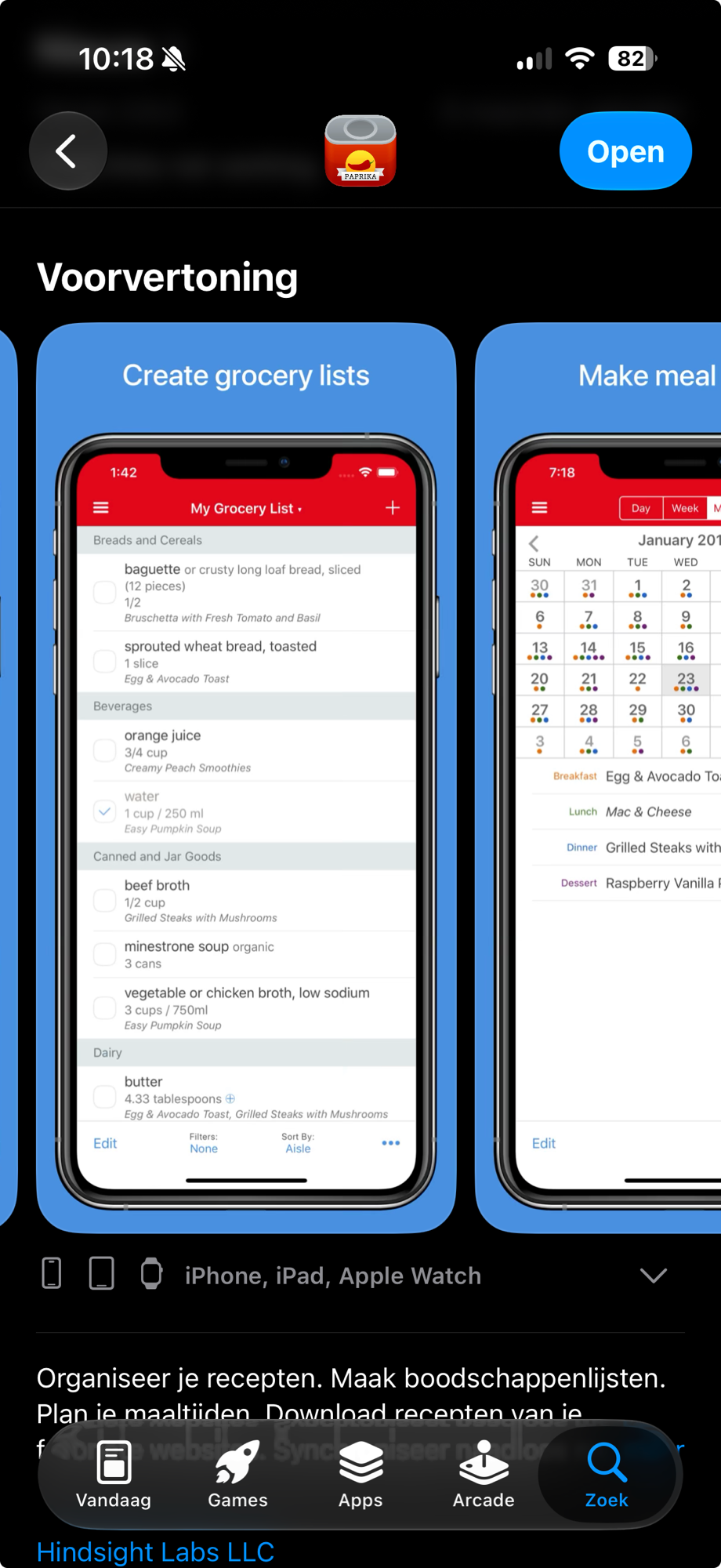
Most recipe apps are databases with a timer. The pleasure of cooking gets lost between the ingredient list and the clock.
I wanted a cookbook, not a database. The second motive: to feel what AI-assisted development is actually like. So I built all of it myself, via Claude Code and Xcode.

- 01Role
- Designer & developer
- 02Stack
-
- SwiftUI
- CloudKit
- Apple Vision
- Python
- Claude Code
- 03Status
- TestFlight beta
- 04Year
- 2026
The hard parts (sync, import, shared accounts) are solved, so I could spend time on decisions. A weekly meal planner learns from what you cook and adjusts to time, budget, and what the kids will actually eat.
- Native feel
- Sharing flow
- Speed
- Usage tracking
- Freemium model
- Token spend
- StoreKit pricing
- Haiku vs Sonnet
- Caching
- CloudKit Sync
Inside the app
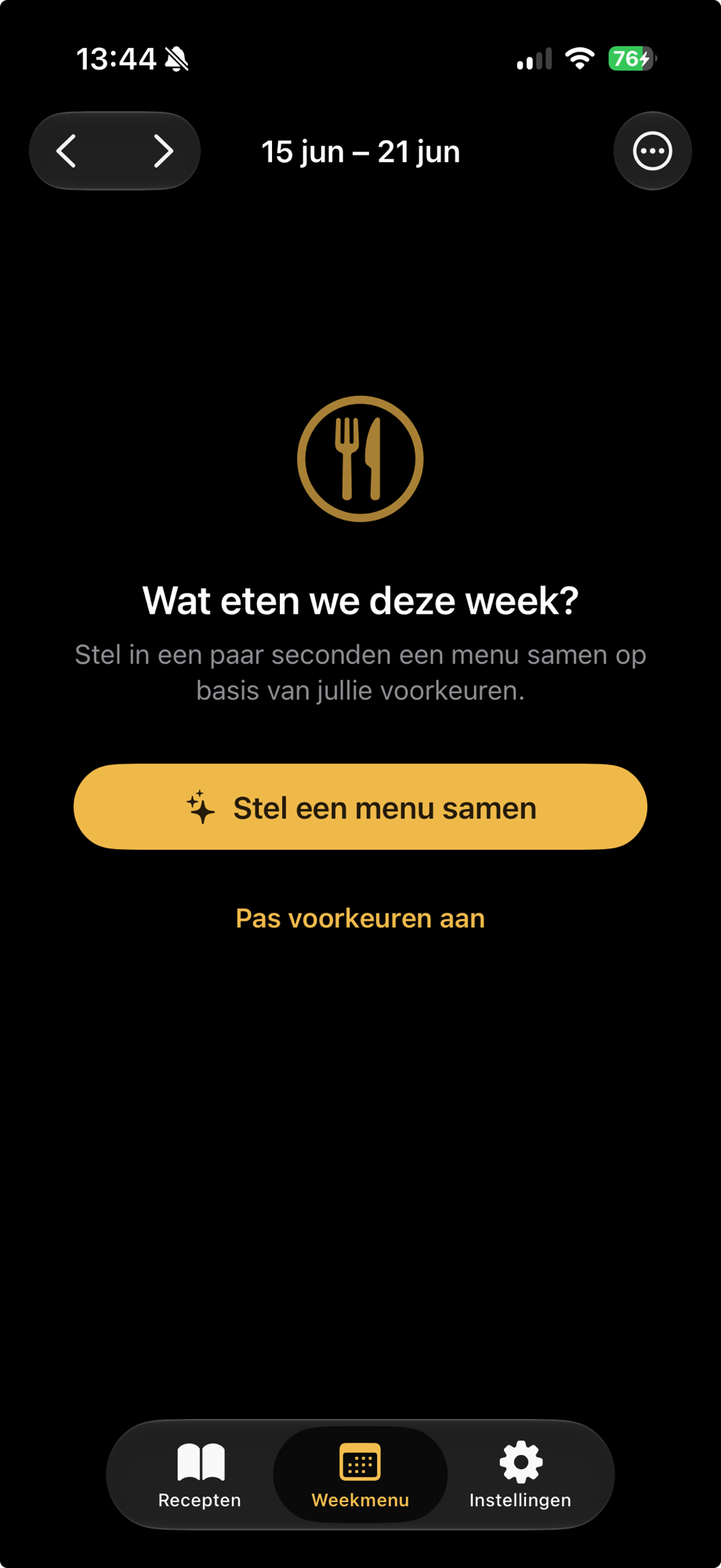
The killer feature is the weekly meal planner. Say who’s eating and what they like, and it builds the week in seconds.
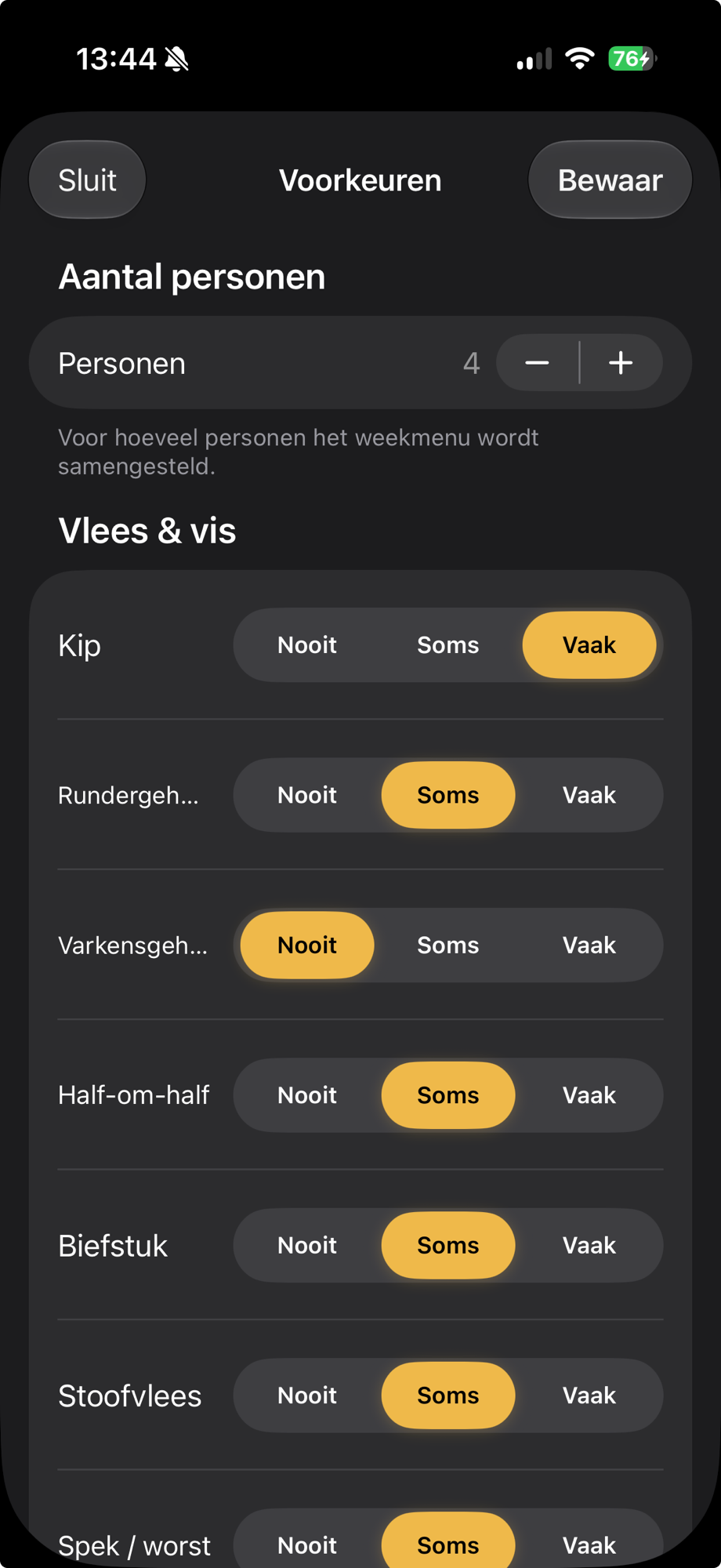

Architecture
- No backend. CloudKit syncs everything. No server, no logins.
- AI through a small Worker, to keep the key off devices.
- Sonnet for reasoning, Haiku for the rest.
Craft
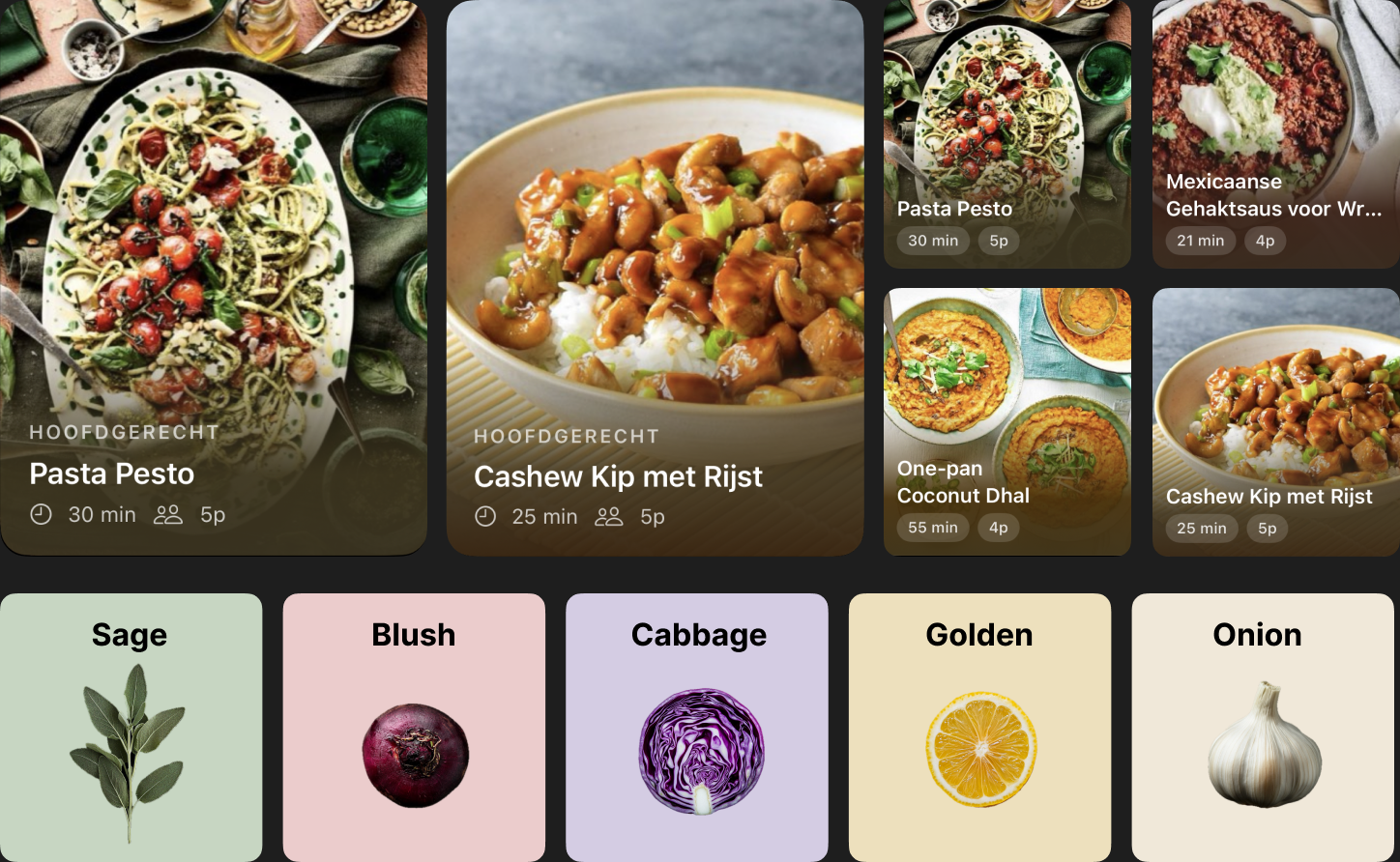
No Figma, no sketches. Designed in code, against real content. Cards built like movie posters, a brand palette plus per-recipe accents, and an A/S monogram like a cookbook spine. AI-augmented, not AI-decided.
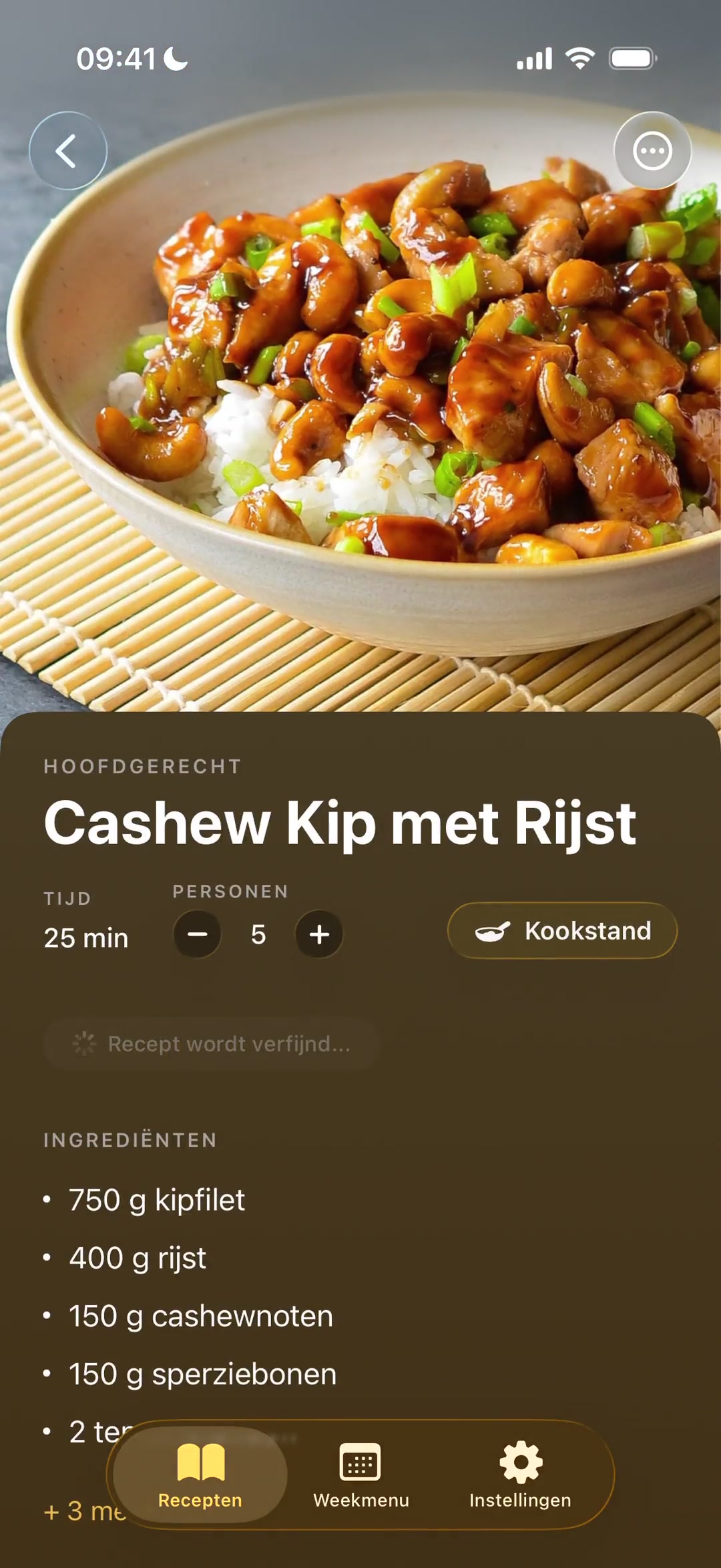
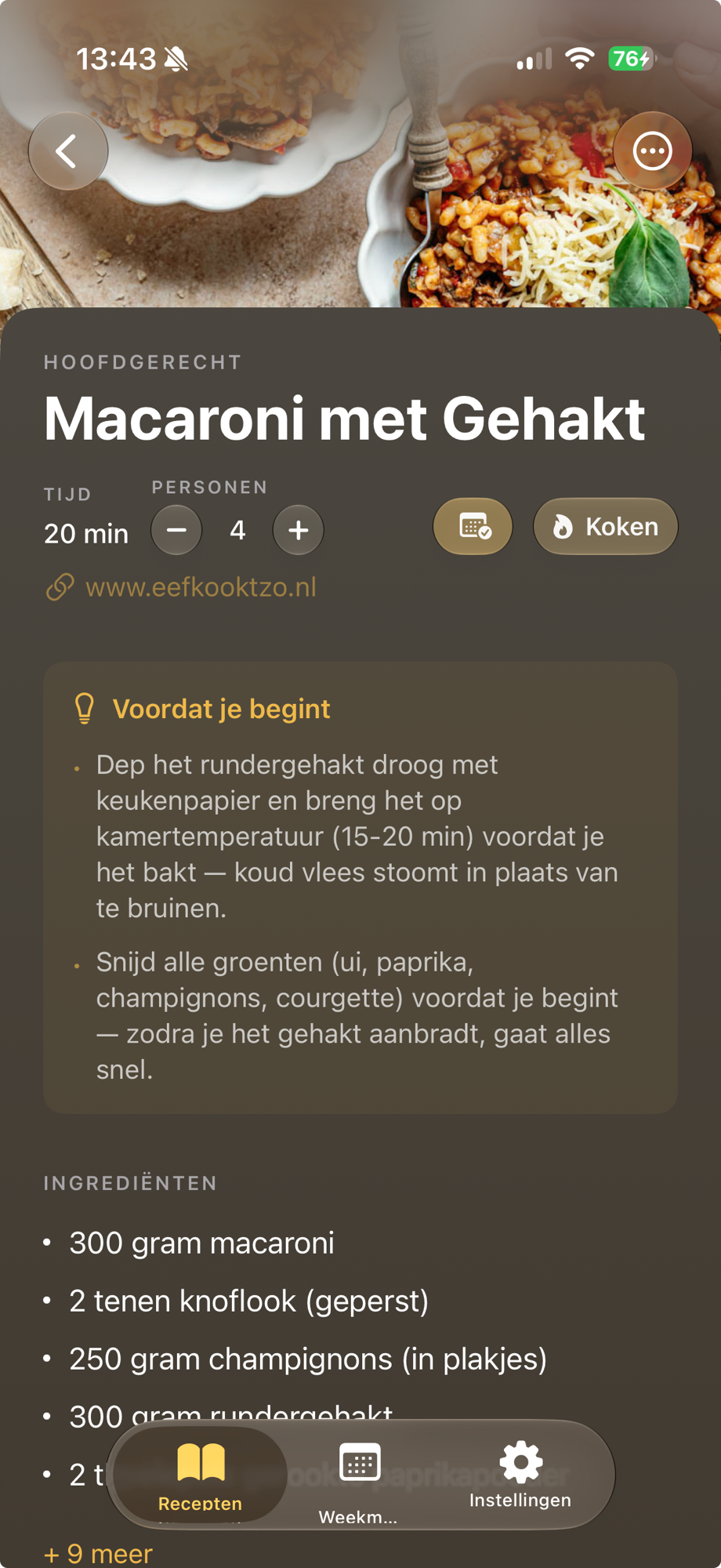
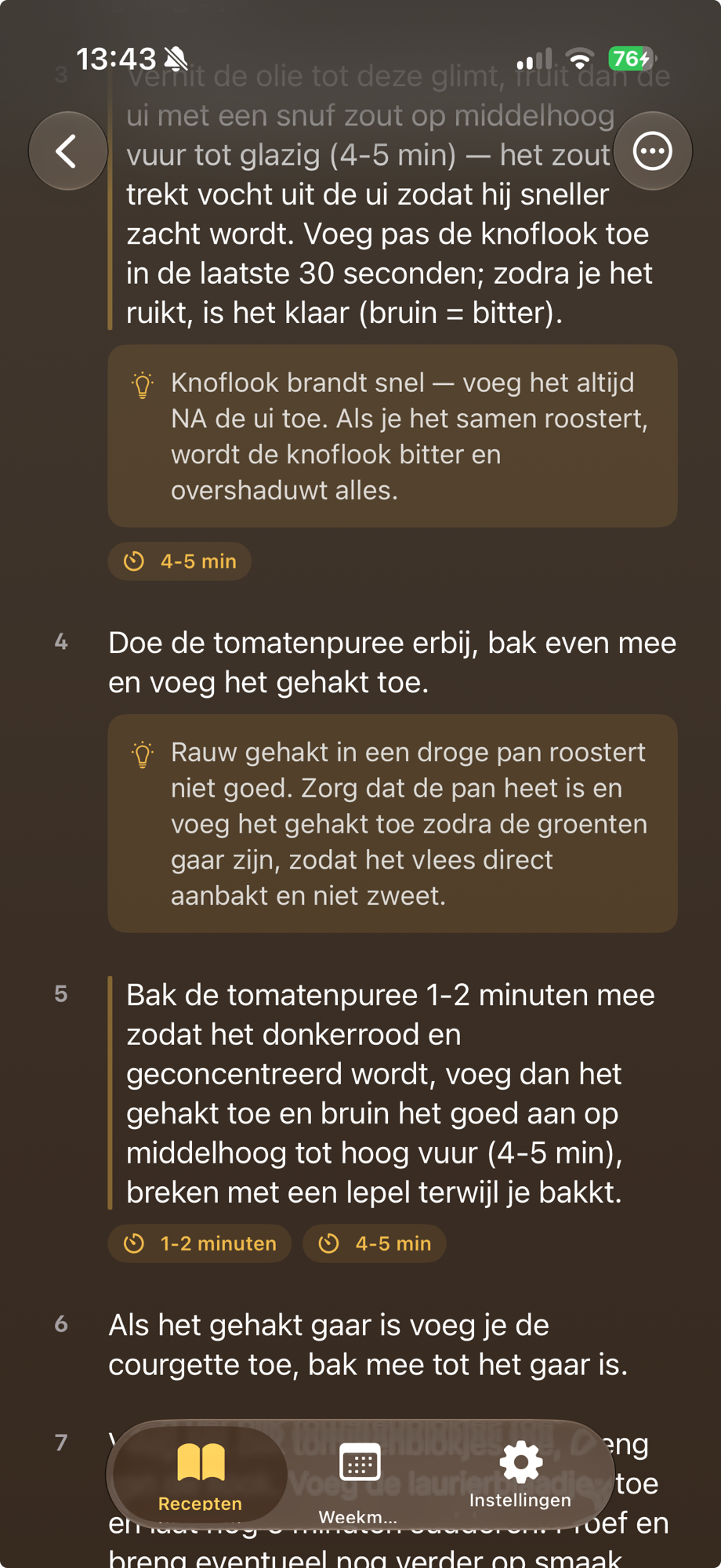
Recipes can be refined in place. The AI folds prep tips and timing into the steps, augmenting the cook, not replacing the recipe.
Tested in the wild
The week menu is the killer feature, but generation takes 50+ seconds. The wait is dull.
— Krijn, tester
The API I can’t speed up; the perception I can. Recipes now reveal one by one, so the wait becomes anticipation.
A real, shipped app, and the clearest answer I have to what AI-assisted product work actually looks like.
I wrote up the whole experiment, what worked and what didn’t, on LinkedIn ↗.